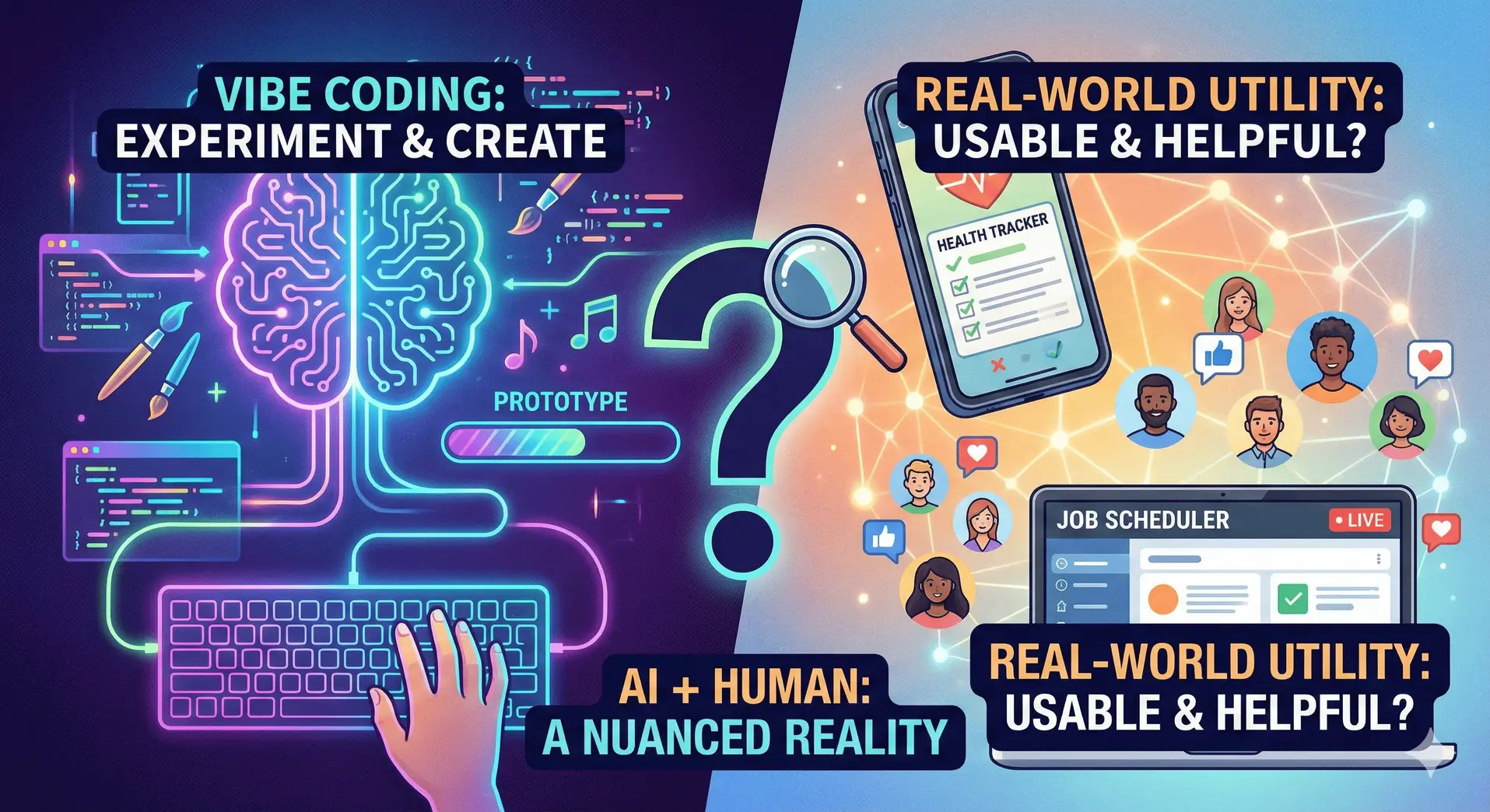
Has Vibe Coding Ever Produced Something Good and Usable?
In 2025, many developers and hobbyists have experimented with vibe coding—building software by leaning on AI tools for code generation, rapid prototyping, and creative exploration. Despite concerns about the quality and originality of such projects, the experience and outcomes reported by users reveal a nuanced reality.
The Value of Vibe Coding Projects
- The definition of a “valuable” project varies widely between individuals. What one person finds trivial, another may see as innovative or essential. This highlights that utility in software is often context-dependent and subjective.
- Fast turnover in tech means that software quickly becomes outdated or replaced. Instead of fixating on permanence, practitioners recommend focusing on dynamic, evolving perspectives and embracing change.
Real-World Examples and Utility
- Several contributors pointed out their success building real, usable tools with AI-assisted workflows. Projects mentioned include web platforms for health management, job scheduling tools, and apps that simplify everyday tasks.
- While these products may not be as polished as those created by professional engineers, their existence demonstrates that non-experts can solve tangible problems and achieve working solutions. Some makers even earn income or derive satisfaction from sharing their creations with user communities.
Developer Experience and Community Attitude
- Some creators use AI tools to fill knowledge gaps, quickly prototype, and release software—even without fully understanding all the code. This approach has led to functioning products despite persistent bugs or technical quirks.
- There’s recognition that coding can be accessible and enjoyable, with a lower barrier to entry for new learners and those tinkering for fun or utility. The rise of AI allows people to experiment more freely, creating side projects or addressing personal needs.
- However, criticism and skepticism exist, usually when grand claims about AI replacing human developers appear unsubstantiated. Many experienced developers advise maintaining realistic expectations and encourage a constructive community attitude—one that values passion projects and positive engagement over negativity.
Reflection on Innovation and Learning
- Vibe coding fosters creativity, collaboration, and experimentation. Even if projects do not reach the level of enterprise-grade software, they contribute by sparking interest, democratizing development, and encouraging learning.
- As AI continues evolving, the line between hobbyist and professional coding will blur further. Human oversight and decision-making remain essential, but innovations from non-traditional developers play a role in moving the field forward.
Vibe coding may not always produce groundbreaking or flawless products, but it has undeniably helped many build functional, helpful, and sometimes income-generating software. The community’s experience suggests that openness, experimentation, and collaboration remain more important than perfection.